
Short Game
How to get more spin with your wedges
The one-hop-and-stop wedge looks like a wrist trick. The repeatable version starts with a clean, dry collision, predictable contact, and a landing spot you can actually practice.

Spin is a contact problem before it is a wrist trick
A wedge that lands, hops, and stops looks like it has a secret. The less glamorous truth is more useful: the clubface and ball need a clean collision, the strike has to arrive in a predictable part of the face, and the shot needs enough speed and loft to create useful spin.
TrackMan identifies four major contributors to spin rate: spin loft, club speed, friction, and centeredness of contact. Spin loft is roughly the difference between the loft delivered at impact and the club's angle of attack. That sounds technical, but the practical lesson is simple. Spin does not come from one move. A dirty face can waste a beautiful swing. A glancing strike can waste speed. A wet lie can place grass and water between the grooves and ball.
The five ingredients you can control
| Ingredient | What helps | What steals consistency |
|---|---|---|
| Contact | A strike slightly below face center with ball then turf. | Thin, heavy, high-face, or toe-side contact. |
| Friction | A clean, dry face and ball with no grass trapped at impact. | Water, mud, sand, thick grass, or packed grooves. |
| Speed | Enough committed motion for the shot's intended carry. | Deceleration or swinging harder than contact can support. |
| Delivered loft | A functional blend of dynamic loft and attack angle. | Extreme shaft lean, scooping, or a glancing strike. |
| Ball and landing | A consistent ball, receptive green, and useful descent angle. | A distance ball, firm downslope, tailwind, or unpredictable bounce. |
That list also explains why spin can disappear even when the swing feels good. A shot from clean fairway turf and a shot from damp rough may leave at similar speeds but reach the green with very different spin. Grooves help move moisture and debris away from the impact area; they cannot make a wet, grass-covered collision identical to a dry one.
Start with the lie, because the lie sets the ceiling
A closely mown, dry fairway lie gives the face its clearest access to the ball. Dry light rough can still produce plenty of control, but it introduces grass between the surfaces. Wet rough is the warning label: less friction can create a higher-launching shot with less spin and more release. A bunker shot is its own collision, with the club moving through sand rather than contacting the ball first.
That means the correct goal changes with the lie. From a clean fairway, I can plan for a lower flight and more check. From wet rough, I should allow a larger landing area and more rollout instead of demanding a highlight-reel reaction from a low-friction situation.
A stock setup for a controlled pitch
This is a starting point for a normal pitch from a decent lie, not a law for every golfer or shot:
- Choose the landing spot first. Spin is useful only when carry distance is useful.
- Use a modestly narrow stance. Let pressure favor the lead foot without locking the body in place.
- Play the ball near the middle. Move it only enough to produce a clear contact and flight pattern.
- Keep the handle neutral to slightly forward. Excessive forward lean can turn bounce into a knife edge; adding loft by scooping can create a weak, glancing strike.
- Turn through the shot. Let the chest, arms, and club continue together rather than stopping the body and throwing the hands.
A good wedge fitting often looks for contact in the lower-middle portion of the face, around grooves two through five. That is different from blading the ball with the leading edge. The sole still has a job: the correct bounce and grind help the club reach that strike without digging or bouncing unpredictably.
Clean grooves are free spin insurance
Grass packed into a groove is not a badge of hard practice. It is material that the next shot has to move before the face can interact with the ball. The easiest maintenance routine is small and frequent:
- Carry a damp towel and wipe the face after every wedge shot.
- Use a soft or medium nylon brush for debris that the towel leaves behind.
- At home, use warm water, mild soap, and a medium-soft brush, then dry the head thoroughly.
- Use a wooden or plastic tee gently for one stubborn groove rather than an aggressive metal point.
- Keep raw, unplated wedges dry when stored unless you accept the patina they are designed to develop.
I would avoid groove-sharpening tools. USGA and R&A equipment rules limit groove dimensions, volume, edge sharpness, and face roughness. A club whose markings are intentionally altered through re-grooving has to satisfy the current specifications. At home, I cannot verify those measurements by eye, and I can also damage the finish or face.

The first drill: own the low point
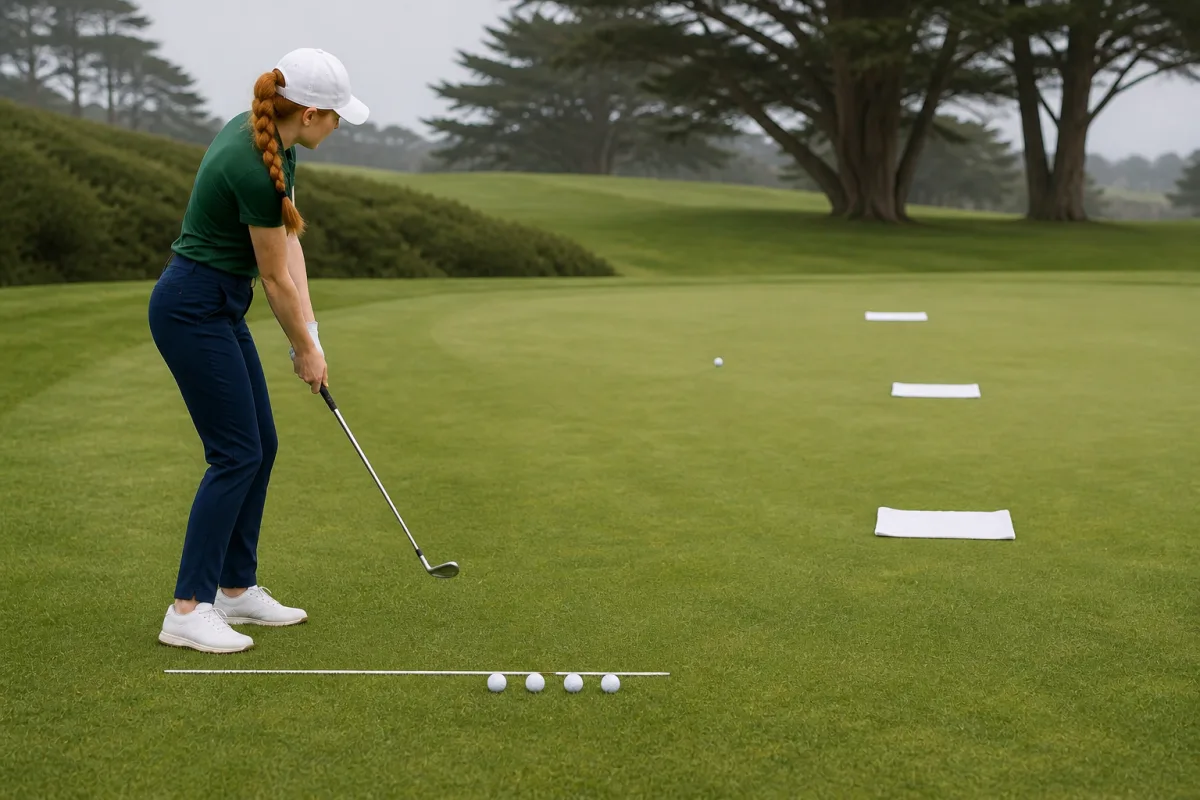
Before trying to make the ball rip backward, make the ground contact predictable. On a practice area that permits it, place a flat towel about four inches behind the ball. Alternatively, draw a washable spray-chalk line perpendicular to the target and place the ball on the line. Do not put a raised alignment stick where the club could strike it.
- Hit ten waist-high pitches from a clean lie.
- Miss the towel. With the chalk-line version, look for a shallow brush or the beginning of the divot on the target side of the line.
- Keep the same landing target and note carry plus rollout.
- Stop the set if the strike scatters; rebuild contact before adding speed.
The score is not revolutions per minute. The score is how many balls carry within a useful window and finish in a predictable area. Once eight of ten strikes are clean, move the landing target or add a little speed while preserving the same contact.
Build the drill into a landing ladder
Place three towels or flat hoops at short, medium, and long landing distances. Hit three balls to the nearest zone, three to the middle, and three to the farthest. Use one wedge first. When that pattern becomes reliable, repeat it with a lower-lofted wedge and compare flight and rollout.
This teaches the part that spin videos often skip: a spinning shot still has to land in the right place. A ball that checks beautifully six yards short is not controlled. A lower-spinning ball that lands on the chosen patch and stops near the hole is.
The ball matters, but consistency matters first
A multilayer urethane-covered ball generally offers more greenside spin potential than many firm, distance-oriented ionomer balls. It also costs more. The useful test is not whether the premium ball produces the single most dramatic shot; it is whether its launch, carry, feel, and rollout improve your decisions often enough to justify the price.
Practice with the model you play when you are measuring spin and rollout. Range balls are excellent for contact and distance practice, but their covers, age, and construction can make a wedge-spin comparison misleading. The broader golf-ball guide starts the fitting process from the green and works back to the tee.
When clean grooves are still worn grooves
There is no honest universal replacement schedule. A golfer who practices bunker shots several days a week can wear a wedge faster than someone who plays twice a month. Sandy soil, range volume, strike location, face material, and storage all change the timeline.
I would inspect the area where the ball actually contacts the face. If the texture is visibly polished, groove edges look rounded, launch and rollout become less predictable from clean lies, or a fresh demo wedge creates a repeatable difference in the same test, replacement becomes a performance decision rather than a calendar ritual.
Normal wear does not automatically make a once-conforming club illegal. Purposefully cutting or reshaping grooves is a different matter. Clean first, test second, and replace only when the evidence survives more than one good shot.
Four spin myths worth leaving behind
"A 60-degree wedge always spins more"
More static loft changes the launch and spin-loft potential, but a poor strike with 60 degrees can spin less and finish farther away than a clean 54-degree shot. Loft is one ingredient, not a guarantee.
"Swing harder and the ball will zip"
More speed can create more spin when the other conditions hold. More speed with worse contact creates a faster mistake. Build the collision before building the throttle.
"Rust creates tour spin"
A raw finish is an unplated surface that develops patina and rust. It can reduce glare and create an appearance some golfers like. Rust itself is not a substitute for legal grooves, face texture, friction, and contact.
"Backspin is always the goal"
A ball that stops near its pitch mark is often perfect. Backing a ball down a slope or away from the hole is simply the wrong result with theatrical movement.
A ten-minute plan for the next practice session
- Clean and dry the wedge and five playable balls.
- Hit ten low-point pitches without touching the towel or starting behind the line.
- Hit nine balls through the three-zone landing ladder.
- Record the typical carry and rollout, not only the best shot.
- Finish with three random lies and adjust the landing plan to each one.
That sequence does not promise a ball that tears backward on command. It builds something more useful: a shot whose contact, carry, and first bounce stop being surprises. The spin can then do its actual job - helping a good decision finish closer.
Sources
- TrackMan: what spin loft means
- TrackMan: speed, spin loft, friction, and spin rate
- USGA: clubface, groove, and face-roughness requirements
- USGA: common questions about groove rules
- PGA of America: how a club and wedge fitting works
More from this series
Clubs and Gear Without the Guesswork
Part 4 of 10. Choose a useful bag, ball, scoring club, distance device, and first purchases around the golfer you are now.
Keep reading
Here's another article you can enjoy
How to stop three-putting: the first drill and a practice plan
Separate long-putt speed from short-putt start line, begin with one simple drill, and build a routine for home, the practice green, and the minutes before a round.
How to choose a golf ball without overthinking it
Distance, feel, spin, compression, and price explained for newer avid golfers.
So many clubs! What pros carry and beginners actually need
The 14-club rule, wedge gaps, woods, hybrids, putters, and the case for giving every club a job.