
Golf equipment
So many clubs! What pros carry and beginners actually need
Golf bags can get confusing fast. Here is what the 14-club rule, a few professional setups, and my own not-quite-full bag taught me about choosing clubs that actually belong.
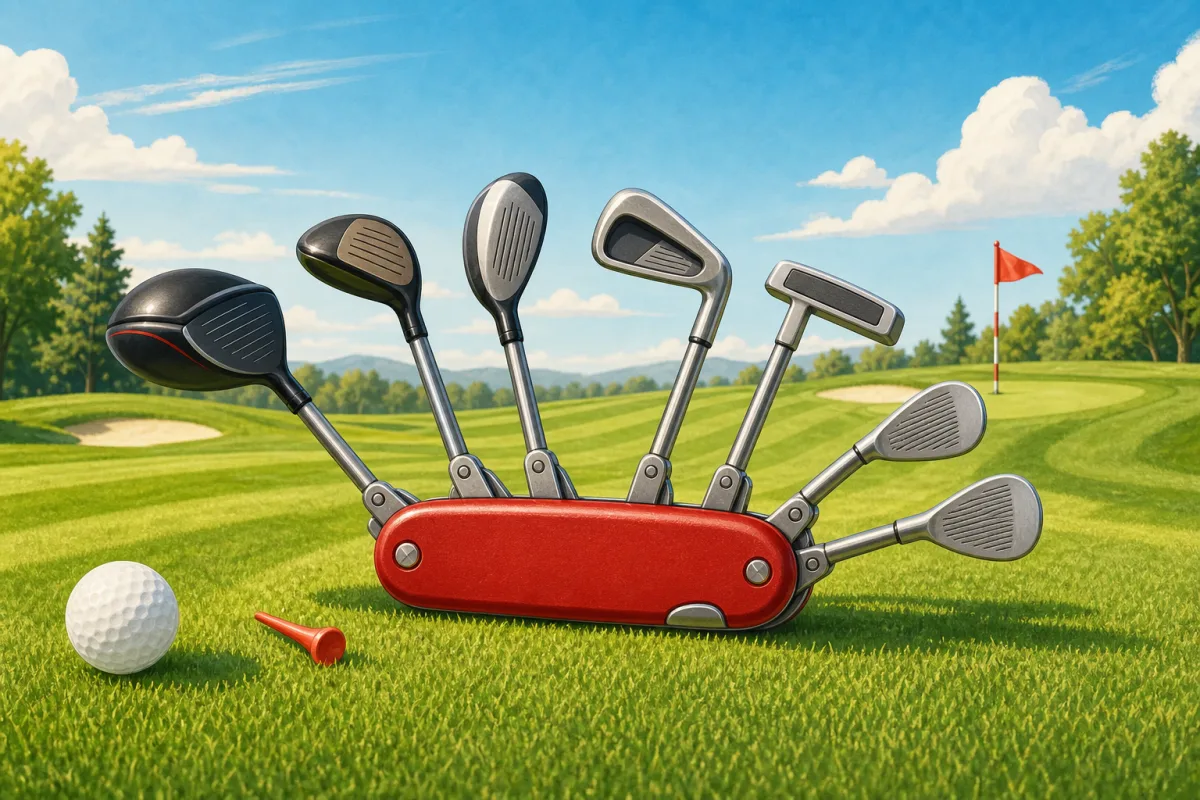
At some point, golf stops being: "Here is the ball. Here is the club. Hit the ball."
And becomes: "Why does this person have four wedges, two fairway woods, one utility iron, a putter that costs as much as rent, and a headcover situation that looks like a small zoo?"
That was more or less my reaction when I started paying closer attention to golf bags.
At first, a bag seems simple enough. Driver. Irons. Putter. Maybe a wedge or two. Then the golf bug bites a little harder and suddenly you are asking dangerous questions: Do I need a 3-wood? Should I get a 7-wood? Is a hybrid smarter? Why do some people carry four wedges? Is my driver holding me back, or am I blaming innocent equipment?
And of course, the dream is that technology will eventually finish the job. I set my bag down, it hands me a beer, plays the round for me, and by the time I wake up, golf is over and everyone is clapping.
We are not there yet.
The quick answer
You may carry up to 14 clubs, but you do not need all 14 to enjoy golf or improve. A newer golfer is usually better served by clubs that cover useful distances, inspire some confidence, and make decisions simpler.
A practical beginner-to-avid setup might include a reliable tee club, a fairway wood or hybrid, a useful run of irons, two or three wedges, and a putter. The exact mix depends on your swing, your carry distances, the courses you play, and which clubs you can hit without immediately questioning your life choices.
First, the one actual rule
Rule 4.1b from The R&A says a player must not start a round with more than 14 clubs or have more than 14 during the round. If you start with fewer, the rule allows you to add clubs up to the limit, subject to restrictions on how they are added.
So, "I do not even have 14 clubs yet" is not a problem. It is a perfectly normal place to be. The goal is not to fill the bag because the rule book leaves room. The goal is to carry clubs that help.
My current bag: not full, but very golf
Right now my bag has 11 clubs:
Long clubs
Callaway driver and Ping 5-wood.
Irons
Callaway Big Bertha 5-iron through 9-iron.
Scoring clubs
The set pitching wedge plus TaylorMade raw 52° and 58° wedges.
Putter
An old Ping blade-style putter.
So yes, I have room for more. That is both exciting and a little dangerous. Once there are open slots, the brain starts treating every club shop like a draft room and every purchase like the move that will complete the roster.
This is where it helps to ask a better question: What is each club supposed to do?
What pros carry, and what they are actually teaching us
Looking at professional bags can make the categories easier to understand. I do not think a beginner should copy a tour bag one-for-one. That sounds like a good way to spend a lot of money and immediately hit a 3-iron into a pond. But pro setups do show us the logic.
TaylorMade's April 2026 report on Rory McIlroy's bag describes a driver, fairway wood, 4-iron, 5- through 9-irons, wedges, and a putter. Titleist's report from the 2022 PGA Championship lists Justin Thomas with a driver, two fairway metals, 4- through 9-irons, four wedges, and a putter. Callaway's Xander Schauffele equipment page shows the same job-based pattern across driver, utility wood, fairway wood, irons, and wedges.
Those bags change, and those pages are snapshots rather than permanent inventories. Still, the pattern is useful:
- something for maximum distance
- something reliable below driver
- irons for approach shots
- wedges for scoring shots
- a putter to clean up the emotional damage
Every club has a job. That matters more than the shopping list.
Driver and putter: one of them is lying to us
The driver says, "Let us be heroes." The putter says, "I clean up the mess."
The driver is probably the most fun club in the bag when things are going well. It is also the club most likely to make you believe a video about 17 more yards will fix your life. The putter is quieter, but if you are trying to score, it matters every bit as much.
The real confusion usually begins between those two ends of the bag: wedges, woods, hybrids, long irons, and all the "should I add one more club?" decisions.

Wedges are where things get weird fast
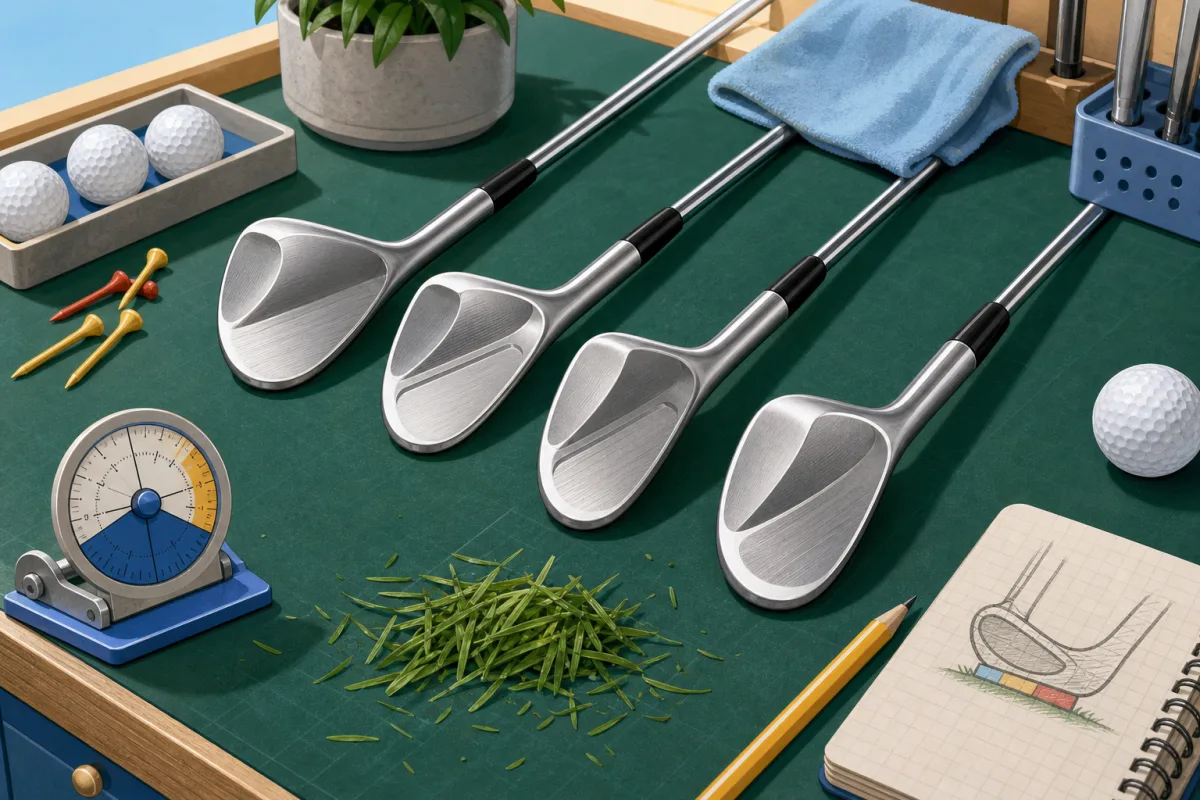
This is probably the biggest question in my bag. I have a pitching wedge, a 52°, and a 58°. That setup is playable. It is also the part of my bag that makes me ask the most questions.
The first thing I need to learn is the loft of the pitching wedge in my particular Big Bertha set. Set pitching wedges can vary by model and year, so the useful question is not merely whether I own one. It is: How large is the loft and carry-distance gap between my pitching wedge and 52°?
Justin Thomas's publicly reported 2022 setup offers an extreme tour example: roughly 47.5°, 52.5°, 57°, and 60.5°. That is not a prescription for the rest of us. It illustrates how carefully a professional can divide the scoring end of the bag.
For a normal golfer, the lesson is simpler:
- You do not automatically need four wedges.
- You do need to understand your real carry-distance gaps.
- Loft is a useful starting point, but the shots you can produce matter more.
For my bag, I would first confirm the pitching-wedge loft and measure carries. Then I could compare the simplicity of PW / 52° / 58° with a smoother progression such as PW / 50° / 54° / 58°. The numbers should solve a real gap, not merely look tidy on paper.
When should you replace wedges?
My non-dramatic answer is: when they stop earning their keep. Visible face and groove wear, changing launch or spin on familiar shots, and less predictable distance control are reasons to compare the old wedge with a fresh one. There is no need to replace a trusted wedge on an arbitrary calendar, but scoring clubs deserve attention because confidence is part of their job.
Should I get a 3-wood, 7-wood, or hybrid?
This is where golf becomes an identity test.
The 3-wood says, "I am a serious golfer." The 7-wood says, "I would actually like to get the ball airborne." The hybrid says, "I enjoy making contact."
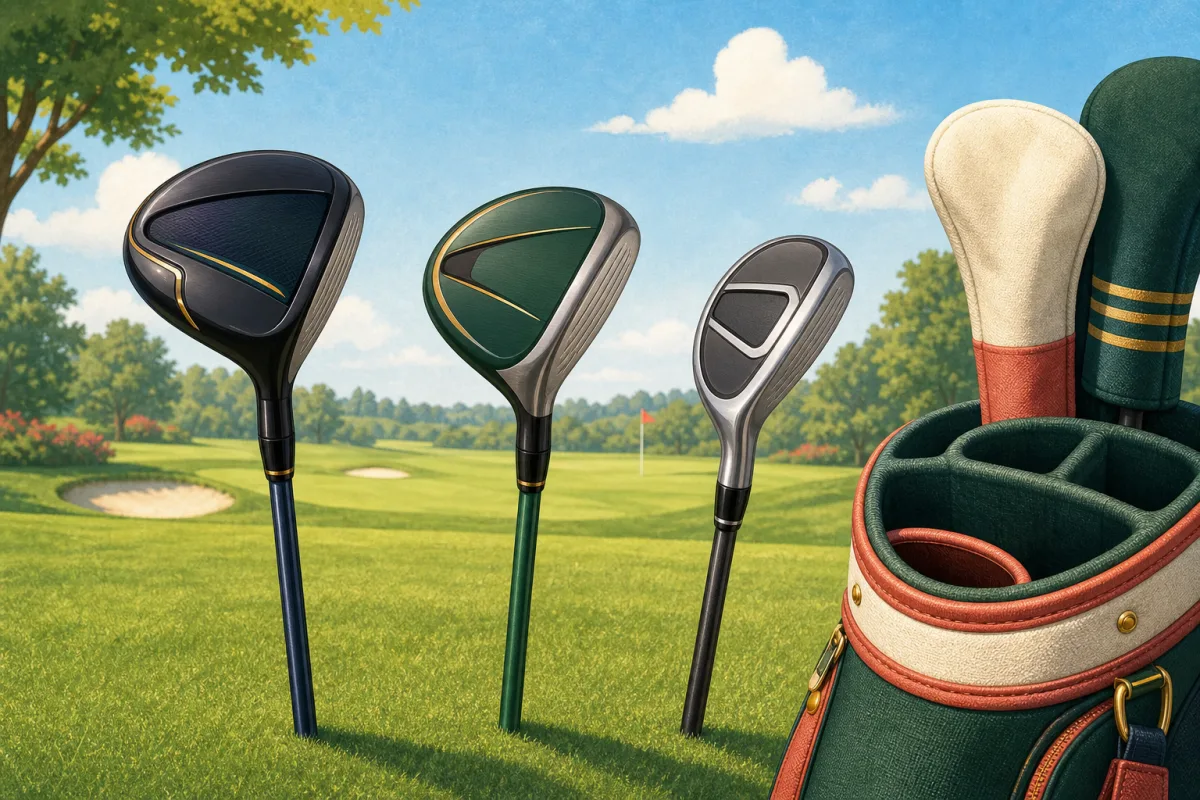
A 3-wood can be excellent as a second tee option or a long club from the fairway, but it is not automatically the next club after a driver. For many recreational golfers, its lower loft and longer shaft make it a demanding shot from the ground.
A 7-wood or hybrid may offer a friendlier way to bridge the distance between a 5-wood and 5-iron. The practical comparison is not which club sounds more advanced. It is which one launches reliably, lands at a useful angle, handles your common lies, and produces a distance that is otherwise missing.
Because I already carry a driver and 5-wood, and because I enjoy a short par-3 course like Golden Gate Park, I would test a 7-wood and a hybrid before assuming I need a 3-wood. Easier to hit is an underrated feature.
What if my irons are extended?
My driver and 5-wood are standard length. My irons and wedges are extended 1.75 inches. If I add a hybrid, I would not automatically carry that same extension over.
A hybrid is its own fitting question. Length changes more than posture: it can affect strike location, lie delivery, swing weight, and control. I would test standard and adjusted builds, watch where I strike the face, and let the club's intended job guide the result. This is a fitting decision, not a simple equation.
The fancy putter question
Now for the extremely responsible equipment question: Should I get the fancy L.A.B. putter?
I respect the ambition. I also think putters are unusually personal. If my old Ping blade looks right, starts the ball where I intend, and gives me useful feedback, there is no rule requiring me to replace it with a spaceship.
If I consistently struggle with face control or never feel comfortable over the ball, testing another design makes sense. I would roll the L.A.B. beside a blade, a conventional mallet, different alignment systems, and different grips. I would not make it my first spending priority ahead of wedge gapping, the missing club between 5-wood and 5-iron, or more reps.
Do I understand the temptation? Completely.

How important is my driver, really?
The driver matters, but it gets too much credit for our problems and too much marketing support for our optimism. A better fit can help when a driver's loft, length, shaft, or head characteristics are a poor match. A new model cannot fix a problem that has never been identified.
If the question is, "Should I spend big money on a new driver right now?" my answer is: only if I know what problem I am solving.
If I were ranking my own bag priorities, I would put them in this order:
- Confirm the pitching-wedge loft and clean up wedge gapping.
- Test a useful club between 5-wood and 5-iron.
- Then consider top-end changes such as a 3-wood or new driver.
So how many clubs do you really need?
You need enough clubs to cover your common shots without turning every round into a committee meeting.
You do not need 14 clubs because the rules allow 14. You do not need to copy a professional bag because the pros are good. And you do not need to buy a club because it has a carbon crown and a video promising explosive ball speed.
You need clubs that make sense together. Start with the ones you trust, learn your carry distances, give wedge gaps real attention, and choose forgiveness over ego more often than not.
The golf bug makes a person curious. It makes us want to tinker, test, and imagine the next club could unlock something. Sometimes it might. Most of the time, the smartest bag is not the fullest one. It is the one where every club belongs.
Sources and further reading
- The R&A: Rule 4, The Player's Equipment
- TaylorMade: Rory McIlroy equipment report, April 2026
- Titleist: Justin Thomas 2022 PGA Championship bag
- Callaway: Xander Schauffele equipment page
Keep building the bag
More from this series
Clubs and Gear Without the Guesswork
Part 1 of 10. Choose a useful bag, ball, scoring club, distance device, and first purchases around the golfer you are now.
Keep reading
Here's another article you can enjoy
Golf club offset: when it helps, when it hurts, and what to buy
Offset can support an open-face miss, but it is only one part of an iron. Here is how to recognize it, test it, and know when your fit deserves another look.
How to choose wedge loft, bounce, and grind
A wedge stamped 56 degrees can be a digger, a glider, a bunker specialist, or the most versatile club in the bag. Loft is only the first angle in the decision.
How to get more spin with your wedges
The one-hop-and-stop wedge looks like a wrist trick. The repeatable version starts with a clean, dry collision, predictable contact, and a landing spot you can actually practice.