
Practice
Should you tee up an iron on a par 3? I have gone full T
If the rules give me a clean, repeatable lie, I am taking it. I now tee up my par-3 iron shots as low as I can and keep the rest of the swing recognizably iron-like.
The short answer
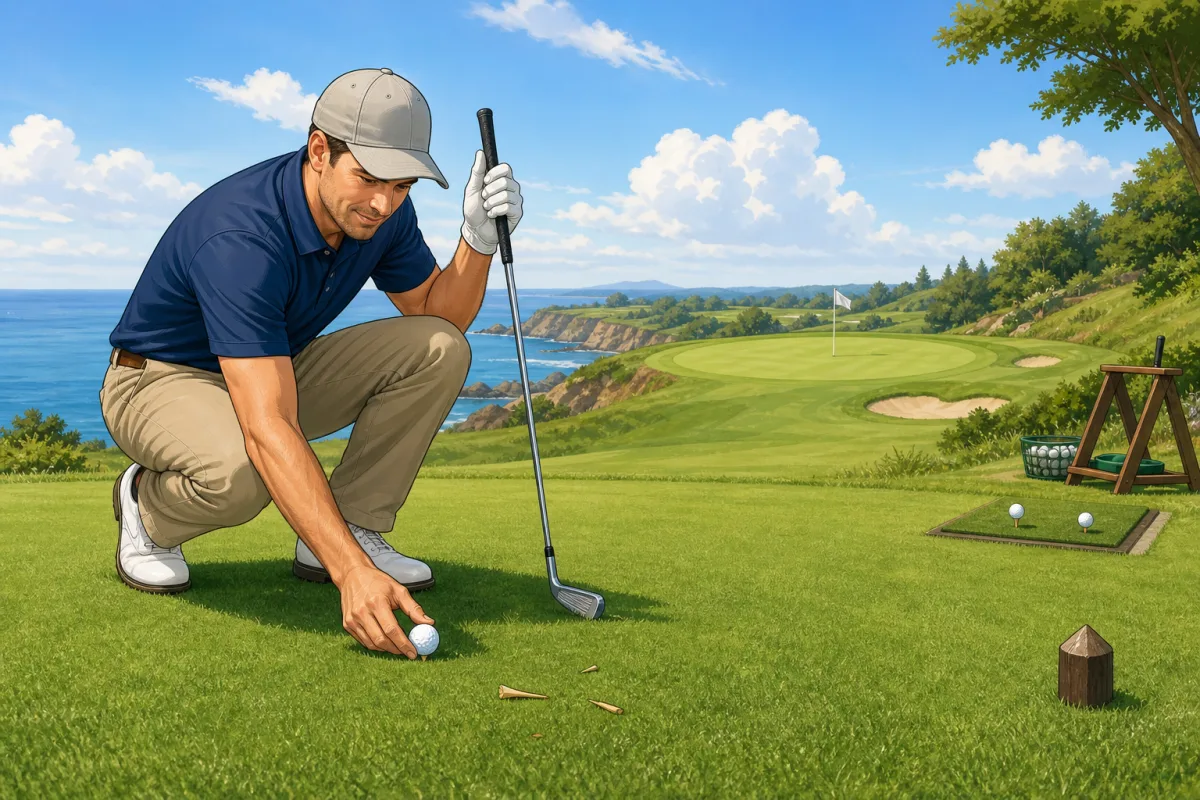
Yes, I can tee up an iron when I start a hole from the teeing area. The Rules of Golf allow the ball to be played from a conforming tee or directly from the ground. Since I have the choice, I have gone full T.
I bring my own tee, or I find a usable broken tee left around the tee box and push it back into the ground. I shove it down until only the tip is visible. The ball is barely raised, but it sits on the same clean little platform every time.
That is the entire appeal. Tee-box grass can be thin, chewed up, wet, uneven, or fluffy. The tee gives me a consistent look no matter what the turf decided to do that morning. It removes one variable before a shot that already has plenty.
The rules really do give me the option
Rule 6.2 says a ball played from the teeing area may be placed on a tee or played from the ground. A legal tee cannot be longer than four inches, point out the line of play, unduly influence the ball, or otherwise help make the stroke.
A normal wooden or plastic golf tee is the simple answer. A short broken tee can do the same job if it still holds the ball securely and does not introduce any alignment contraption. I am not building equipment in the tee box. I am finding the lowest stable perch I can.
The important distinction is that the rules answer whether I may use a tee. They do not promise that any tee height will produce a good iron shot.
How low should I tee an iron?
My starting point is barely above the grass. I want to see a little of the tee under the ball, not a full stem. If the tee feels visually important when I stand over the shot, I probably left too much of it exposed.
PGA Professional Brendon Elliott uses a very low tee as the iron example in a range drill that moves from a high tee to the ground. That progression makes sense to me: the tee can clean up the lie without asking me to invent a separate impact pattern for the par 3.
I still want the club to reach the bottom of its arc in the same useful place. The ball may sit slightly above the turf, but I am not trying to lean back and lift it. The iron has loft. I do not need to help it into the sky.
Could I tee it higher for a higher shot?
Maybe, but I would treat that as an experiment rather than a promise. A higher tee changes where the ball can meet the face and may change how I deliver the club. It does not automatically produce a controlled higher flight.
If contact begins climbing too high on the face, the result can lose speed or feel strangely soft. If I start sweeping because the ball looks suspended, I may also move away from the iron strike I am trying to trust everywhere else.
The tee gives me more options, and that is useful. My default still needs to be boring: barely teed, normal setup, normal target, normal iron intention. I can explore a slightly higher tee at the range after the default works.
Will this hurt my shots from the fairway?
This is the part I do not want to ignore. I have not played a full eighteen in a while, and most of those full iron swings will not come with a tee. If every confident strike I make is perched on wood, I could begin to distrust the turf shot I still need on the course.
The solution is not to give up the advantage on par 3s. It is to keep practicing both lies. A very low tee should support my ordinary iron motion, not replace it. Turf practice lets me see whether the bottom of my swing remains dependable when the little platform disappears.
I also have to separate practice from play. The course is much more fun, but it is a terrible place to repair a shot while a group waits behind me. The range is where I build evidence. The course is where I use it.
The first range test I would do
I do not need a launch monitor or a spreadsheet large enough to frighten an accountant. I need one iron, one target, twenty balls, and enough honesty to count the ugly ones.
- Hit five from a barely visible tee. Use the height I plan to take onto a par 3.
- Hit five directly from the turf. Keep the target, setup, and swing intention the same.
- Repeat both groups. Alternating the lies keeps me from getting too comfortable with only one look.
- Track strike and start line. I care more about centered contact, a useful launch window, and confidence than the single longest ball.
If I have foot spray or impact tape, I can see whether the tee is moving contact up the face. If the barely teed group is cleaner and the turf group remains solid, I have a par-3 advantage without creating a fairway problem.
Use the course to confirm, not rebuild
On the course, I want one decision. I pick the club, press the tee down until the tip remains, choose the target, and swing. I do not test three heights while everybody watches.
After the round, I can remember whether the ball started where I expected, whether contact felt centered, and whether the tee changed my confidence. Those notes can shape the next range session. They should not turn the next tee box into a laboratory.
There will still be imperfect shots. A consistent lie cannot close the clubface, choose the target, or manage my nerves. It simply means the ground under the ball is no longer the surprise.
I am not looking back
I was told to take every advantage the rules give me, and this one costs almost nothing. A barely teed ball gives me the same picture even when the tee box has been through a long day. It lets me focus on the target and the swing instead of negotiating with a patch of grass.
I will keep practicing full swings from turf because the rest of the course is not going to install tees for me. But on a par 3, the ball is going onto a tee. Low, simple, repeatable, full T.
Sources and further reading
- The R&A: Rule 6, playing from the teeing area
- The R&A: Equipment rules for conforming tees
- PGA of America: Three tees and the ground iron drill
More from this series
Practice and Golf Fitness
Part 3 of 8. Build a practice habit and support the movement that lets you enjoy more golf.
Keep reading
Here's another article you can enjoy
How to make range practice feel like golf: a 45-ball plan
Turn one bucket into targets, club changes, simulated holes, consequences, and a useful note for next time.
So many clubs! What pros carry and beginners actually need
The 14-club rule, wedge gaps, woods, hybrids, putters, and the case for giving every club a job.
A 10-minute golf warm-up before a round
Dynamic movement and progressive swings so the first tee does not feel like the first rep.