
Golf Adventures
How to get to the golf course with clubs: car, rideshare, bike, and beyond
The round starts before the first tee, usually with a trunk-size calculation and occasionally with me wondering whether a helicopter would be simpler.
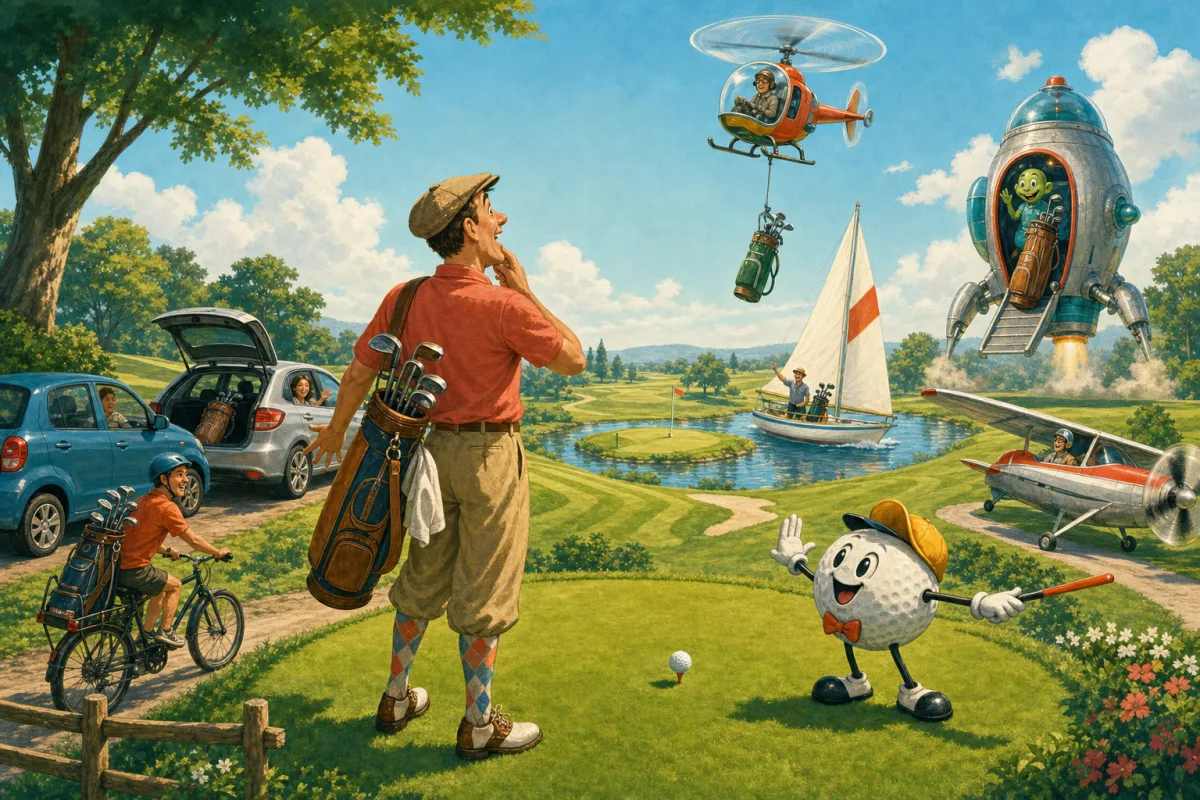
The transportation problem before the golf problem
A golf bag is not ordinary luggage. It is long, awkward, top-heavy, and full of objects I would prefer not to hear bouncing around a trunk. Add three friends, four bags, shoes, push carts, drinks, and the confidence of someone who says, "It will fit," and the first competition of the day begins in the parking lot.
Driving my own car is the predictable answer when I know the bag fits. Rideshare can remove the parking problem. An autonomous car can work without requiring anyone in the group to drive home. A bicycle can make sense for a close course and a light setup. Public transit can be excellent or exhausting depending on the route.
The best option is not the most creative one. It is the one that gets the golfers and equipment there safely, on time, and without turning the first tee into a recovery period.
The quick comparison
| Option | Best when | Main catch |
|---|---|---|
| Your own car | You know the fit, schedule, and parking plan. | Traffic, parking, security, and deciding who drives after the round. |
| Rideshare or taxi | Parking is difficult or nobody wants the return drive. | A passenger count does not guarantee bag capacity. |
| Autonomous ride | The service area, drop-off, and vehicle all fit the trip. | No driver is available to help rearrange the trunk. |
| Public transit | The route is direct and the bag stays manageable. | Crowding, stairs, transfers, and limited storage. |
| Bicycle | The course is close, the route is safe, and the clubs use a proper carrier. | Balance, visibility, weather, theft, and tired legs before golf. |
| Helicopter or spaceship | The illustration needs a strong finish. | Almost everything outside the illustration. |
Start with the equipment count
Before choosing transportation, I would count the people and the long objects. Four open seats do not mean four golf bags fit behind those seats. A stand bag takes less room than a cart bag. A folded push cart takes more room than optimism predicts. A hard travel case can defeat an otherwise generous trunk.
- Count golfers, bags, and push carts separately. Do not let "four golfers" become the entire cargo plan.
- Measure once at home. Know the bag's total length and widest point with the driver and headcover in place.
- Protect the club heads. Keep them from carrying the weight of luggage or rolling equipment.
- Secure loose cargo. A sudden stop should not turn a rangefinder, shoe bag, or push cart into a projectile.
- Leave an exit margin. The plan should still work if the actual vehicle is smaller than the best example online.
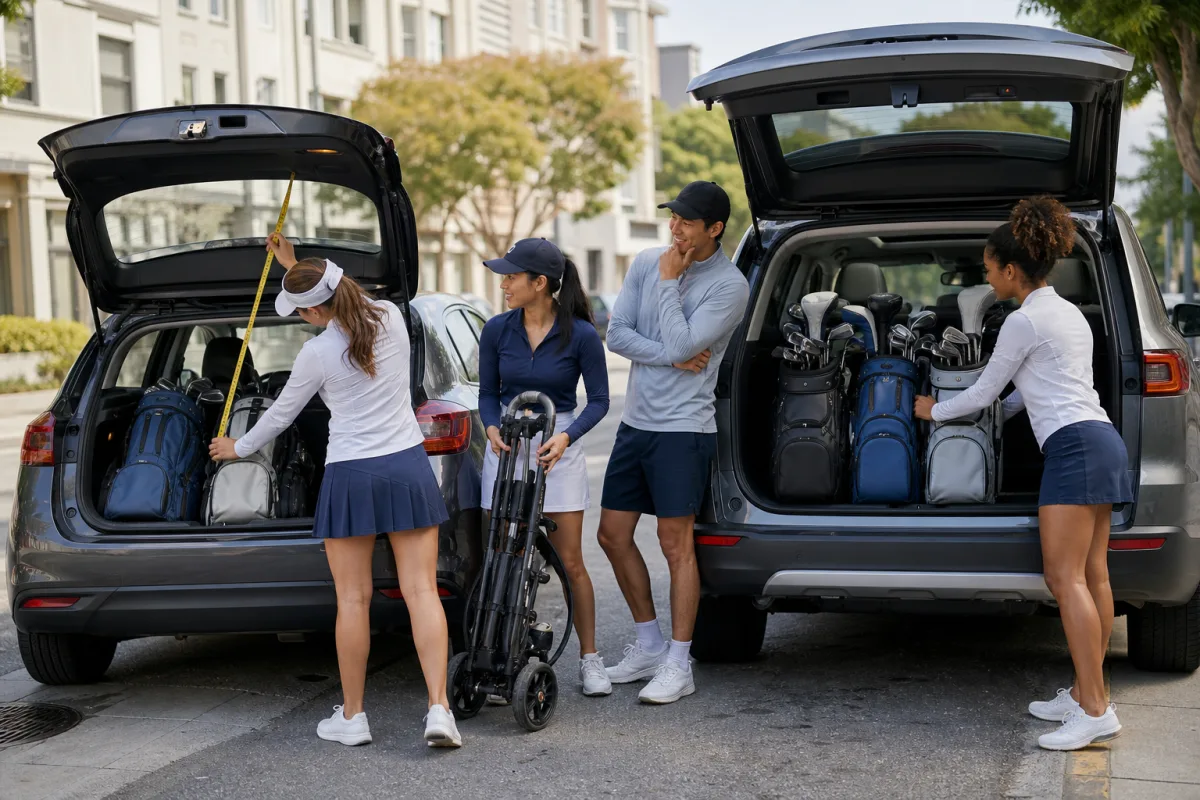
Driving yourself is the control option
My own car gives me the most information. I can test the bag, fold the correct seat, choose a safe position for the clubs, and know whether the push cart still has a home. That does not make loading automatic.
The clubs should fit inside whenever possible, with the bag and other cargo restrained so they cannot move dangerously during a stop. The National Highway Traffic Safety Administration warns that unsecured loads can harm people on and off the road. Tying a bag to the roof because the trunk lost an argument is not a casual improvisation.
Driving also creates the after-golf question. If the group plans to drink, decide on the return trip before the first drink. A rideshare, taxi, designated driver, or sober change of plan is cheaper than pretending the bag requires the same driver in both directions.
Using Uber, another rideshare, or a taxi
Rideshare works best when I treat cargo capacity as uncertain. Vehicle categories describe a service, not the exact shape of the trunk that will arrive. A driver may already use part of the cargo area, a rear seat may not fold, and a group can consume the space that one golfer would have used for a bag.
I would request a larger category when the people and bags are close to the limit, allow enough time to cancel and rebook safely, and keep the pickup area easy for loading. One golfer with one stand bag is a different request from four golfers with cart bags and electric push carts.
If the clubs do not fit without blocking the driver, crushing equipment, or leaving a door unsecured, the answer is not to force them. The answer is a larger vehicle or a different ride.
Waymo and the autonomous-car version
Autonomous rides make this question especially interesting in San Francisco. Waymo documented its fifth-generation Jaguar I-PACE trunk as having room for luggage, a folding wheelchair, and golf clubs. That is encouraging evidence, not a lifetime capacity guarantee. Its fleet and service areas continue to change, and a different vehicle can create a different fit.
The unusual part is that there is no human driver to help fold a seat, move personal cargo, or approve an improvised arrangement. I need to load and unload everything myself, use the app's current service information, and contact rider support if the vehicle or trip creates a problem.
For one golfer and a normal bag, this may be a wonderfully simple way to avoid parking. For a foursome, I would assume multiple cars until the current service proves otherwise.
Public transit works when the route is boring
The ideal transit trip is direct, uncrowded, and light on stairs. The difficult version adds two transfers, a packed vehicle, a long walk, and a golf bag that suddenly has the turning radius of a small boat.
I would check the operator's current luggage rules, use off-peak service when practical, keep the bag upright and under control, and avoid blocking aisles or accessible spaces. A small Sunday bag makes transit more plausible than a fully loaded cart bag. So does leaving the electric push cart at home.
The final walk from the stop matters. A course can look transit-friendly on a map while the entrance sits uphill, across a fast road, or far from the actual clubhouse.
Biking to golf is real, but the carrier has to be real too
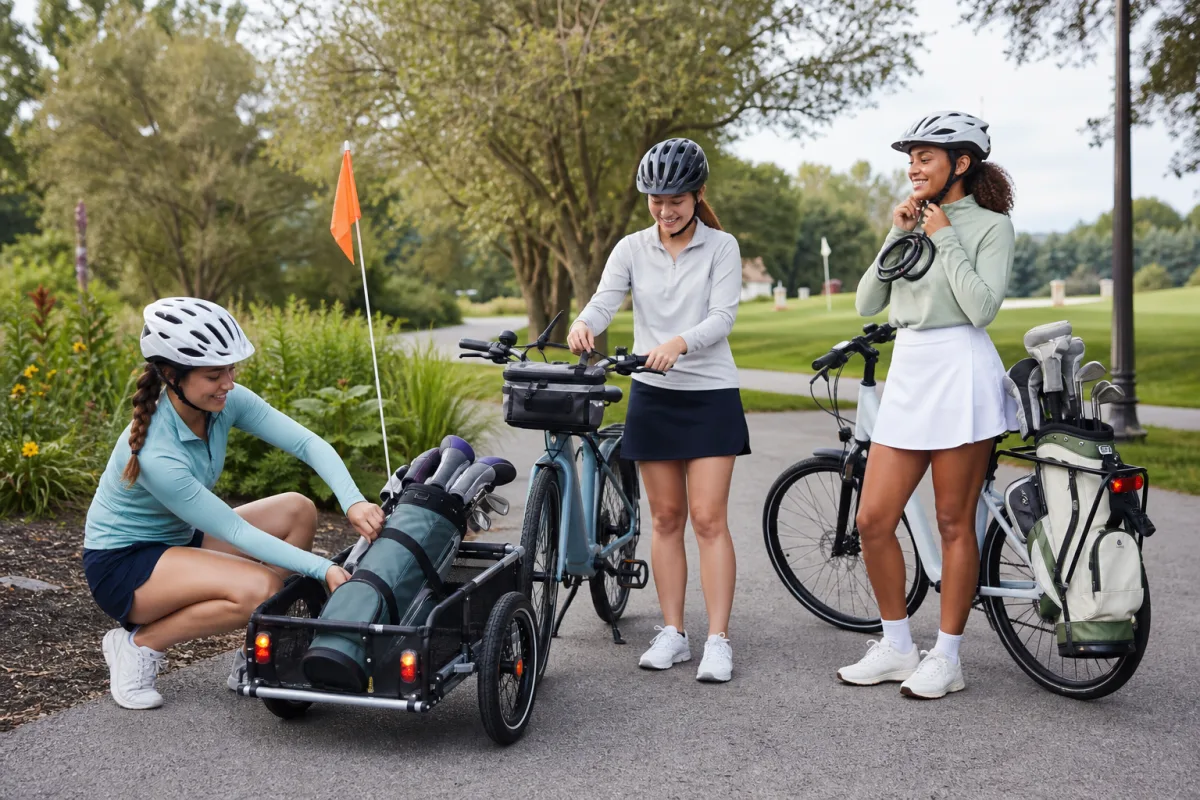
A nearby par-3 or nine-hole course creates the most charming option: ride a bicycle with a small set of clubs. I like the idea. I do not like the version where a heavy golf bag is tied sideways with hope and one old cord.
A purpose-built golf-bag carrier, suitable trailer, or cargo-bike setup should keep the load secure, centered, and clear of the pedals, wheels, brakes, and steering. I would test the loaded bicycle at low speed away from traffic before making the first golf trip. I would also use fewer clubs, remove loose accessories, protect the club heads, and bring a lock that secures the bicycle and carrier.
NHTSA's basic bicycle guidance still applies: use a properly fitted helmet, visible clothing, lights and reflectors when needed, a working bicycle, and predictable road behavior. The golf bag adds complexity; it does not grant an exemption from traffic rules.
Walking all the way there
If the course is genuinely close, walking with a light stand bag may be the cleanest option. The distance to the clubhouse has to be added to the course itself. A mile before a short nine feels different from a long approach walk before an eighteen-hole round.
This is another place where fewer clubs can improve the day. A half set, water, a snack, and the right shoes may be enough. A full cart bag carried by hand is not a character-building requirement.
The ridiculous transportation department
A sailboat could work if the course has a dock and the wind has read the tee sheet. A propeller plane solves traffic by introducing an airport. A helicopter is excellent until the landing fee costs more than the round. The spaceship remains the only option with enough cargo space and no useful return policy.
These are not recommendations. They are what the problem starts to feel like when the fourth bag does not fit.
My five-minute transportation plan
- Count everything. People, bags, push carts, travel cases, shoes, and anything needed after golf.
- Choose the least uncertain option. Known car fit beats a hopeful vehicle category when the tee time is strict.
- Add a loading buffer. Arrival time should survive one cancellation, missed train, or trunk puzzle.
- Secure the equipment. Nothing should block controls, doors, visibility, or safe passenger seating.
- Plan the ride home. Fatigue, food, drinks, darkness, and the last transit departure all count.
The best ride makes the first tee feel ordinary
I want the transportation story to end when I reach the course. If I am still worried about parking, the bike carrier, a crushed club, or whether four bags can fit into one return car, the plan is still playing.
Drive when known capacity matters. Use a larger rideshare when parking or the trip home matters more. Consider an autonomous ride for a small group after checking the current vehicle and service. Use transit when the route is simple. Bike only with a safe route and proper carrying setup.
And if none of that works, the spaceship is waiting in the illustration.
Sources
- Waymo: fifth-generation vehicle design and trunk space
- Waymo: current service and fleet FAQ
- NHTSA: bicycle safety
- NHTSA: securing vehicle cargo
More from this series
Golf Adventures
Part 4 of 7. Plan memorable public-golf days and trips without losing sight of the people, walking, weather, and real-world budget.
Keep reading
Here's another article you can enjoy
How to travel with golf clubs: check them, ship them, or rent?
For a special golf trip, I want my own clubs. I compared shipping ahead with borrowing a hard case, checking the bag, and accepting rental clubs.
Public golf in San Francisco
Five courses I have played, the hilly Presidio round still on my list, and how each fits a different day.
Your friend in the golf game: MGI, Alphard, and electric push carts
My MGI makes walking wonderfully easy. The real buying guide begins when the wheels stop and I have to fold, clean, and lift the machine into my car.