
Returning to golf
Getting back into golf after years away
Your old feel may return before your timing, mobility, or expectations catch up. Give the game a few sessions to become familiar again before changing everything.
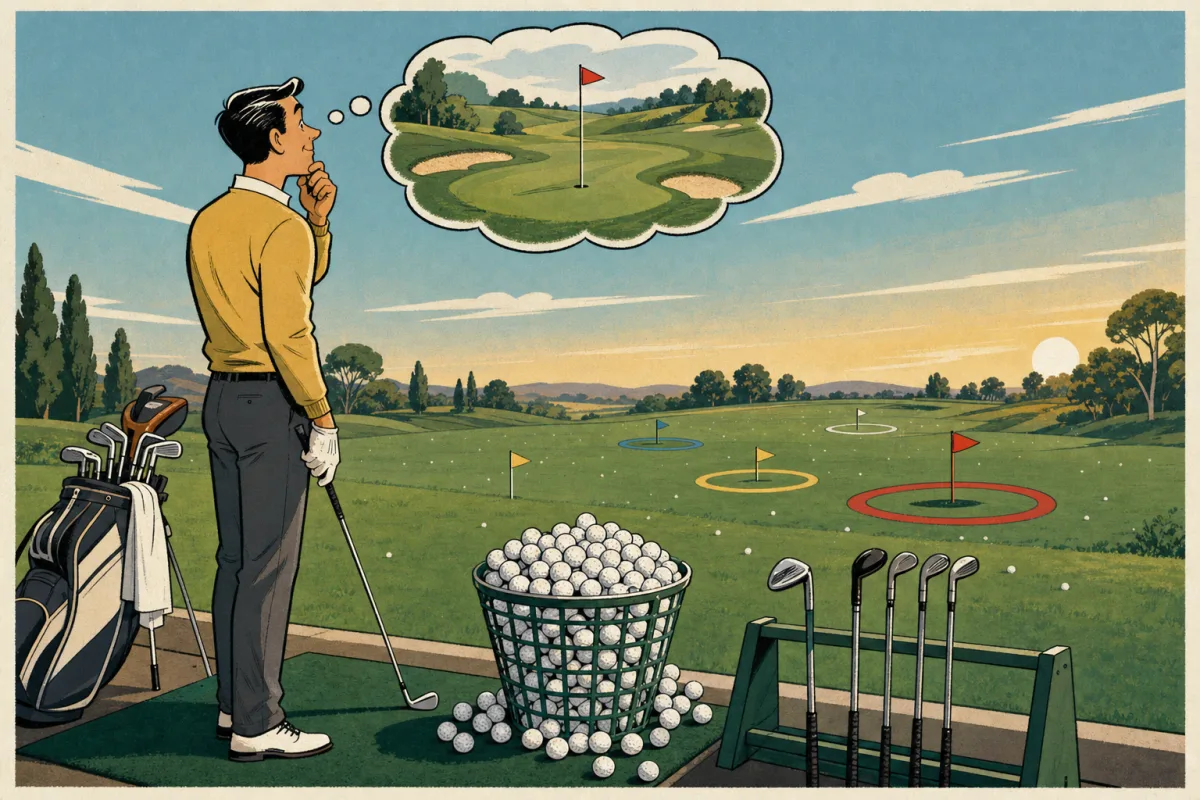
Expect recognition, not instant recovery
The first swings back can feel strangely familiar and completely foreign at the same time. You may remember how a good shot should feel while producing very few of them. That is normal. Coordination returns through repetition, not through forcing your previous swing speed on day one.
Begin with shorter swings
Warm up with chips, pitches, and half wedges. Move to short irons before longer clubs. A measured session helps your hands, balance, and contact reconnect without turning the next morning into a negotiation with your back.
If you have been inactive, treat golf as a physical activity again rather than assuming the old motion is still available on demand. Our pre-round golf warm-up starts gently. Pain, numbness, dizziness, or a previous injury belongs in a conversation with a qualified health professional, not in a larger bucket of range balls.
Consider a tune-up lesson
A coach can identify whether your old fundamentals still fit your body and mobility. Ask for one or two priorities, not a total rebuild. The best return-to-golf lesson gives you a safe setup and a practice cue you understand.
Check old equipment before replacing it
Clean the clubs, inspect the grips, and make sure shafts and heads are secure. Fresh grips may be the only immediate repair you need. Older clubs can still play perfectly well, but modern hybrids, forgiving irons, and lighter shafts may make the return easier if your set is several generations old.
Do not replace fourteen clubs based on one range session. Start with comfort and obvious gaps. Our first golf purchases guide explains which categories create an immediate benefit and which upgrades can wait.
Refresh the small things
Check the glove, shoes, bag straps, rangefinder battery, and golf balls that have been sitting in storage. Make sure spikes or soles still provide traction. Put a fresh towel, sunscreen, water, tees, and a ball marker in the bag. Removing small surprises makes the return feel much calmer.
Relearn your current distances
Your remembered yardages are historical documents, not promises. Use the range, a golf watch, or a launch monitor to establish comfortable carry distances. Choosing a club from present information is much more enjoyable than trying to recreate a number from ten years ago.
Start with three reference clubs, such as a wedge, 7-iron, and hybrid. Record a realistic carry from solid but ordinary shots. Fill in the rest of the bag gradually rather than turning one launch-monitor session into a final exam.
Make the first round easy
- Choose nine holes or a familiar course.
- Play from a shorter tee than you remember.
- Use a cart if fatigue could affect the back nine.
- Play with patient people.
- Keep score only if it adds interest rather than pressure.
Give yourself permission to pick up, skip a hole, or move the ball away from a miserable lie. The first round back is an orientation. A scorecard cannot tell you whether walking felt good, which club inspired confidence, or whether you were already thinking about the next tee time.
Practice for the course again
Repeatedly hitting one club can rebuild contact, but golf also requires decisions. Once the swing feels less foreign, rotate clubs and targets. Our guide to making range practice feel like golf gives each bucket more connection to actual play.
A four-week return plan
- Short-game practice and one gentle range session.
- A lesson or focused fundamentals session.
- Nine holes with low expectations.
- Review distances, equipment comfort, and what you want next.
The goal is not to recover your old golf identity on schedule. It is to build a version of the game that makes you want the next round now.
Where to go next
If your clubs are creating more questions than answers, use our guide to building a useful golf bag within the 14-club limit. For a broader physical reset, start with the educational golf strength and mobility guide and scale everything to your current ability.
More from this series
Starting and Returning to Golf
Part 2 of 2. Friendly roadmaps for beginning the game or finding it again after time away.
Keep reading
Here's another article you can enjoy
How to make range practice feel like golf: a 45-ball plan
Turn one bucket into targets, club changes, simulated holes, consequences, and a useful note for next time.
How to start playing golf: a practical beginner roadmap
What to learn, borrow, buy, and expect before your first full round.
How I am building a more consistent golf swing
I can make a good swing. My problem is finding it again. This is my eight-week weekend plan for better balance, a complete finish, useful lessons, and a motion that travels to the course.