
Golf Life
What is the best weather for golf? Rain, heat, sun, and frost
Sunny and dry sounds perfect until the ball disappears into low sun. I have learned to love a cool San Francisco overcast, but rain, heat, drainage, wind, and frost each change the decision to play.

My perfect golf weather is not a postcard
I live in San Francisco, where a cool, lightly overcast morning can feel magical. The ball stands out against the sky, the sun is not sitting in my eyes at address, and the temperature makes walking comfortable. Give me that soft gray ceiling, a gentle breeze, and a course that is dry enough underfoot, and I am happy.
Bright sun looks better in a course brochure. It does not always help me play. A low sun near the target line can make the ball difficult to see before and after contact. Hot sun adds a hydration problem. Rain can stop while the soil remains saturated. The best golf weather is therefore not one number or icon. It is a combination of personal comfort, visibility, wind, safety, and course condition.
What each forecast means for the round
| Condition | What may be good | What I check |
|---|---|---|
| Cool overcast | Comfortable walking and easy ball visibility. | Wind, recent rain, and whether layers are enough. |
| Clear with low sun | Dry air and pleasant temperature. | Sun angle, glare, and whether the target line points into it. |
| Light rain | A playable, quiet course if the turf is still firm. | Grip, footing, lightning, standing water, and course status. |
| After heavy rain | The rain may be gone. | Saturation, closures, temporary greens, and cart restrictions. |
| Hot and humid | An early tee time can preserve the day. | Heat guidance, shade, fluids, pace, and an exit plan. |
| Frost or frozen soil | A beautiful morning once the course opens. | The course's delay and cart policy, not the parking-lot temperature. |
How much rain is too much rain?
There is no universal rainfall total that answers the question. One course can absorb a storm and reopen well. Another can stay soft after the same rain because of soil, drainage construction, topography, shade, temperature, wind, earlier rainfall, and traffic.
The course's restrictions are more useful than my weather app. Cart-path-only rules, closed holes, delayed starts, temporary greens, or a full closure tell me that the staff is protecting turf or that normal play is not practical. The USGA explains that vehicle traffic on wet soil can create compaction, skidding, and deep ruts that are difficult to repair. A cart restriction is not a challenge to my driving creativity.
Walking is lighter than a golf cart, but that does not make every saturated course ready. Foot traffic, maintenance traffic, balls plugging, slippery slopes, and water collecting in low areas still matter. If the course says it is open, I can play within its restrictions. If it says wait, the weather argument is over.
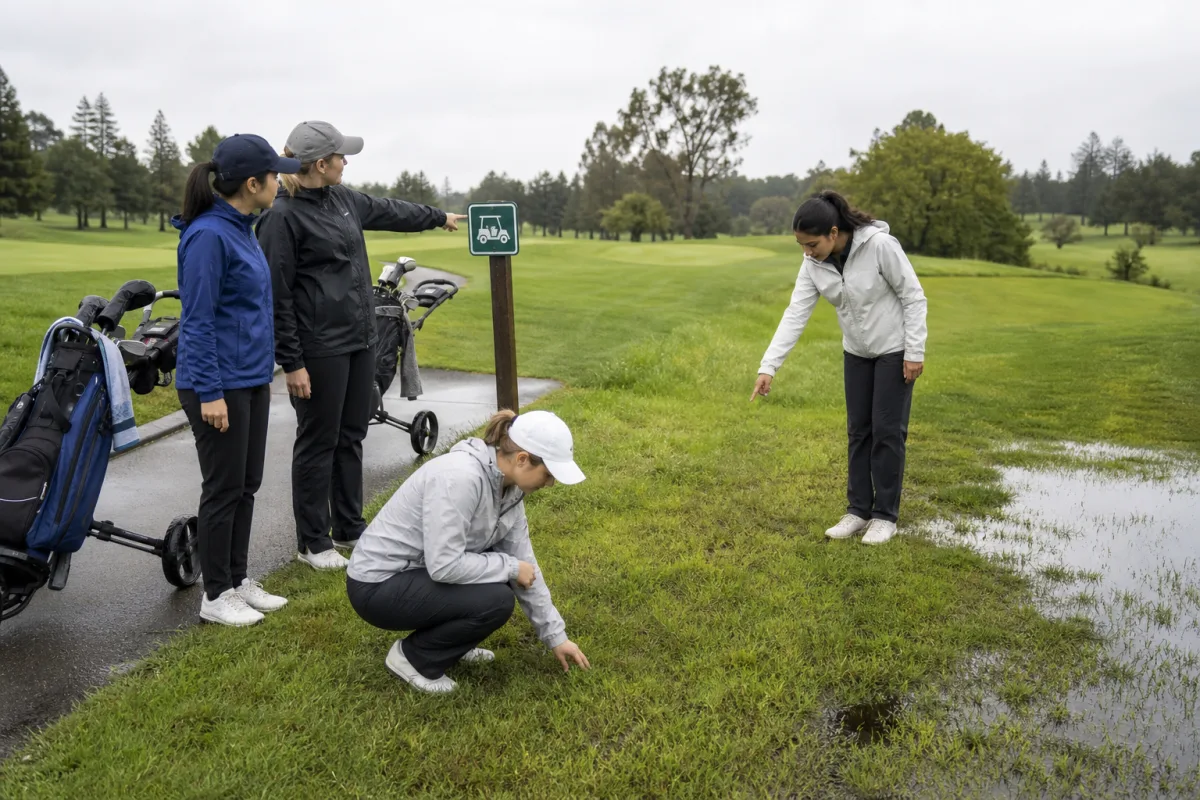
Is golf bad after the course was drenched?
Not automatically. A well-drained course can recover quickly, and a wet round can still be enjoyable with waterproof layers and realistic expectations. The problem is confusing rain that has stopped with soil that has recovered.
On a very soft course, the ball may plug, mud can change contact, fairways may lose roll, bunkers can wash out, and footing can become uncertain. Under Rule 16, temporary water is an abnormal course condition. Free relief is generally available when it interferes with the ball, intended stance, or swing outside a penalty area, using the nearest point of complete relief and the correct relief area. That rule helps with a puddle; it does not turn a saturated property into a firm one.
I would check the local rules before starting because the committee may use preferred lies, mark ground under repair, close bunkers, or adopt other temporary measures. The scorecard and the starter know more about that day's setup than a generic explanation online.
How I would investigate a course's drainage
I cannot learn drainage quality from one dramatic puddle or one dry summer round. I can gather better clues:
- Check the course before leaving home. Look for a conditions notice, delayed opening, temporary greens, closed holes, or a cart rule.
- Call with a useful question. Ask whether the course is firm, wet but playable, or still holding water after the recent storm.
- Look for repeated patterns. Low fairways, shaded rough, flat approaches, and heavily traveled entrances often recover differently from elevated or sand-based areas.
- Notice investments. Drainage projects, tree work, grading, and new catch basins can change how quickly a course returns to normal.
- Keep the verdict temporary. A bad day after exceptional rain is not a permanent grade for the course.
USGA guidance describes drainage as a system that may require soil analysis, engineering, and a multi-year plan. That is why I trust a superintendent's current decision more than a simple ranking of courses that supposedly drain well.
Sunny is not always best
Clear skies can be excellent when the sun is high enough to stay out of the target line and the temperature remains comfortable. Early and late golf complicate that picture. A low sun can erase the ball against the sky, throw long shadows across the green, and make a beautiful hole harder to read.
Overcast light can reduce that glare and give the course a calm, evenly lit look. I still bring sun protection because clouds do not make outdoor exposure disappear. I also pack a light layer; the San Francisco breeze that feels perfect on the first tee can become less charming when I am standing still and waiting on the seventh.
Wind changes the effective forecast
A mild temperature can feel cold in steady wind, and a warm day can become manageable when air is moving. On the golf side, wind changes club selection, ball flight, balance, and pace. I do not need dead calm, but gusts that make a stance unstable or move loose objects are no longer merely an interesting shot-shaping exercise.
Thunder is a separate category. If thunder is audible or the course suspends play, I leave exposed areas and follow the facility's evacuation instructions. A tree is not a rain shelter worth gambling on. No score is important enough to negotiate with lightning.
Hot and humid golf changes the safety calculation
I do not play in hot, humid conditions often, so this is where official guidance matters more than invented toughness. The National Weather Service says the heat index describes conditions in shade, while Wet Bulb Globe Temperature also accounts for direct sun, humidity, wind, and solar radiation. For a long outdoor activity such as golf, WBGT can be the more useful planning tool where a local forecast is available.
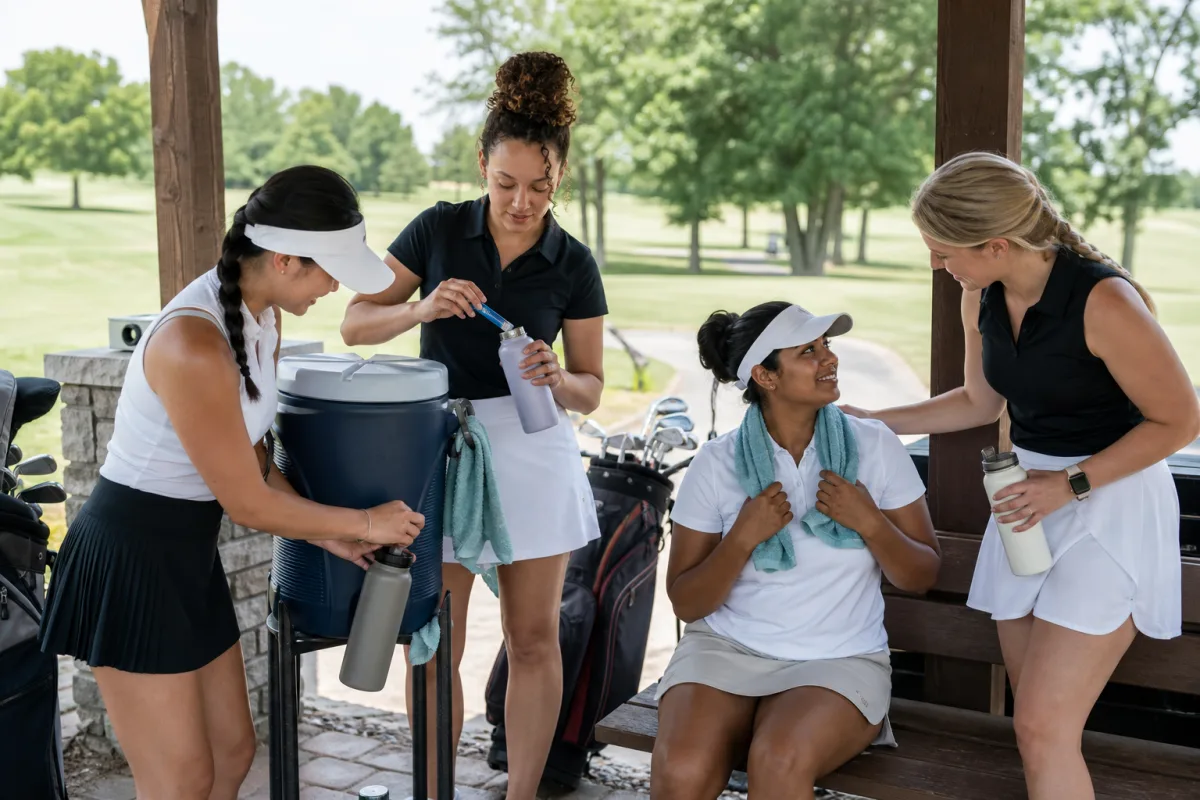
The practical adjustments are familiar because they work: move the tee time earlier, reduce exertion, seek shade, drink regularly, use electrolytes during prolonged heavy sweating, and take breaks before the group is exhausted. Riding may lower the walking load, but it does not create air conditioning between every shot.
Why frost can delay golf after the air warms
Frost delays are more nuanced than the old explanation that every footprint instantly destroys every frozen blade. USGA-funded research found that limited foot traffic did not visibly damage the annual bluegrass putting greens tested during frost. The same research found clear injury from repeated cart traffic on frost-covered fairways, damage from maintenance equipment, and risk when morning soil temperatures were freezing even after visible frost changed.
That distinction supports the course's decision rather than weakening it. Grass species, soil temperature, shade, moisture, carts, maintenance work, and the number of golfers differ from site to site. A shaded green can remain cold while the sunny practice area looks ready. Staff may also need time to mow, roll, or prepare the course after the turf can safely handle equipment.
I can check the delay, drink coffee, and wait. I cannot diagnose every green from the parking lot.
My go, adjust, or wait checklist
Go
- The course is open without a condition I cannot accept.
- There is no active lightning or dangerous-weather instruction.
- The heat, wind, rain, and visibility fit my health and equipment.
Adjust
- Move hot-weather golf earlier and plan shade, water, electrolytes, and breaks.
- Use rain gloves, waterproof layers, extra towels, and footwear with reliable traction.
- Accept cart-path-only, temporary greens, preferred lies, or a slower wet course before paying.
- Choose a tee time that avoids low sun when visibility matters more than the temperature.
Wait
- The course is closed or the frost delay remains active.
- Lightning, flooding, extreme heat guidance, or unsafe wind changes the day.
- The round requires pretending that a personal limit is only a mental weakness.
The best day is the one the course and golfer can handle
My ideal remains a cool San Francisco morning under light overcast. It is comfortable, calm, and easy on the eyes. That preference does not make it a universal formula.
The better rule is to combine the forecast with the course's status and my own condition. Rain totals do not tell the whole drainage story. Sun does not guarantee visibility. Heat requires a plan. Frost belongs to the superintendent. When those pieces agree, I can stop studying the sky and start worrying about the first tee shot.
Sources
- USGA: solving golf course drainage problems
- USGA: why courses use cart-path-only restrictions
- USGA: temporary water and Rule 16 relief
- National Weather Service: Wet Bulb Globe Temperature
- CDC: heat and athletes
- National Weather Service: lightning safety
- USGA: traffic on turf during frost and freezing conditions
More from this series
Golf Life
Part 2 of 2. Choose when and how to play around weather, daylight, energy, and the rest of life.
Keep reading
Here's another article you can enjoy
When do you golf? Morning, twilight, and the weekend round
I prefer the first tee time, once I survive the alarm. Morning, twilight, midday, and weekend golf each solve a different scheduling problem.
Golf course grass types: the full guide to greens, fairways, and rough
Where bentgrass, Bermuda, Poa annua, ryegrass, fescue, and zoysia usually grow - and what each surface means for the next shot.
Walking vs. riding: is there a golf-cart culture war?
Walking has benefits, riding is fun, and moving the bag may be the real question.