
Golf Adventures
A Sligo and Mayo golf trip: four wild links and two honest bases
Sligo and Mayo feel like the trip for friends who want serious links without spending every dinner comparing marquee-course receipts. The reward is space, scenery, and a remote final round that earns the drive.
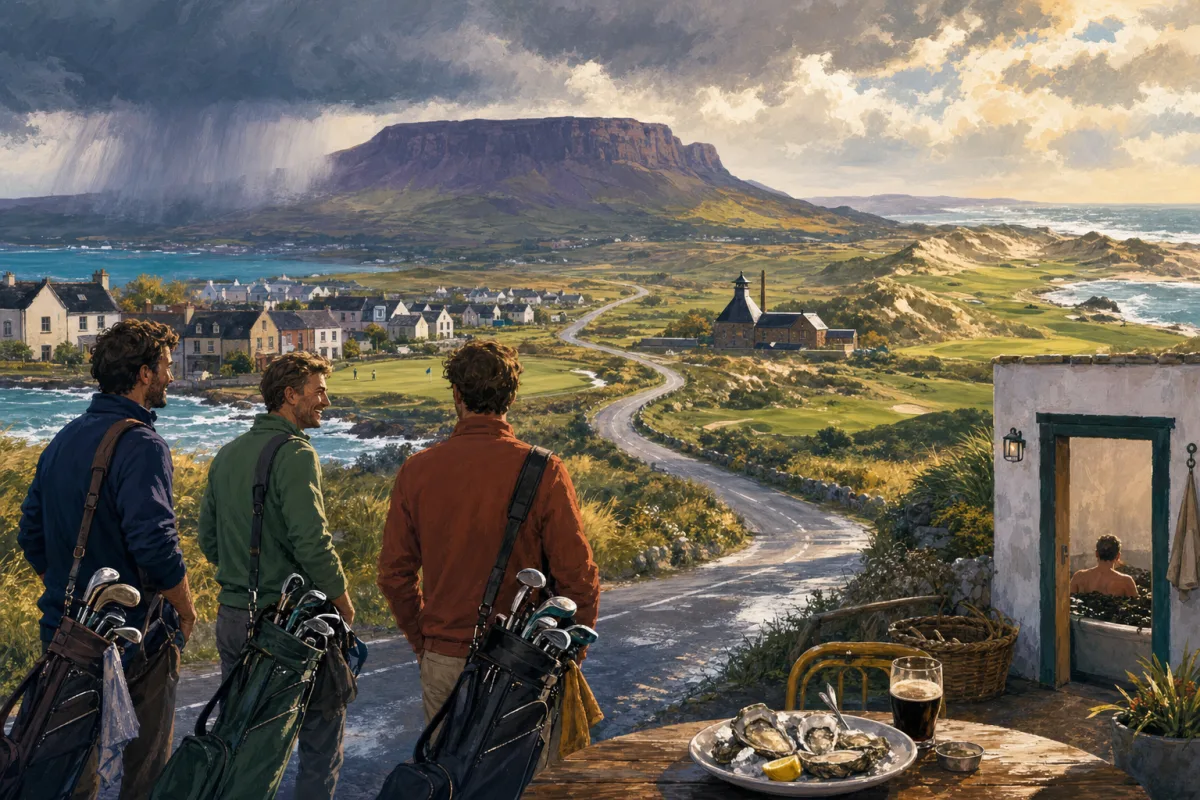
The quieter Ireland trip I would choose
I would give Sligo and Mayo six nights and four primary rounds: County Sligo, Strandhill, Enniscrone, and Carne. The first three form a workable cluster. Carne is the remote destination that deserves its own base near Belmullet.
Official northwest golf guides often continue into Donegal. I am stopping at the county line for a reason. Donegal has enough distance and golf to become tomorrow's complete trip. This route already has Atlantic links, a transfer, and enough food and scenery to fill the spaces between tee times.
A six-night Sligo and Mayo itinerary
| Day | Golf | What happens around it |
|---|---|---|
| Arrival | No primary round. | Settle near Sligo and keep the first dinner easy. |
| Day 1 | County Sligo at Rosses Point. | Clubhouse time, the coast, or dinner in Sligo. |
| Day 2 | Strandhill. | Cafes, the beach, or a seaweed bath after the walk. |
| Day 3 | Enniscrone. | Oysters or a relaxed Sligo dinner after the drive is complete. |
| Day 4 | Transfer and protected weather block. | Move toward Belmullet; a Ballina whiskey stop works only for non-drivers or after parking. |
| Day 5 | Carne Golf Links. | Stay close, eat, and appreciate how far the group came for this one. |
| Day 6 | Optional golf or departure positioning. | Do not turn the return drive into a race against a flight. |
This schedule is intentionally light after Carne. A remote course is not improved by attaching a stressful airport sprint to the eighteenth green.
County Sligo is the historical anchor
County Sligo Golf Club at Rosses Point hosts the West of Ireland Amateur Open and sits between the Atlantic, Benbulben, and Sligo Bay. It is the course I would secure first because it provides both competitive history and the landscape that defines the route.
I would use a caddie or local advice if available. Links lines can look obvious until wind, dunes, and a blind target reveal that my confidence was based on nothing. I want the round to introduce the region rather than become a fight with directions.
The club's visitor information and competition calendar can affect access, so I would verify dates directly before building the route. A famous amateur championship is golf history and also a reason my preferred week may not belong to me.
Strandhill is golf and recovery in the same town
Strandhill keeps the second day compact. The links sits near the village, beach, cafes, and the seaweed baths that have become part of the area's identity. That combination makes it ideal after a full opening round.
The course still deserves full attention. Its coastal terrain and weather are not a warm-up for somewhere else. The difference is that once the last putt drops, the group can stop traveling.
Discover Ireland's Strandhill guide highlights the beach, food, walks, and traditional seaweed baths. I would book the bath in advance if the group wants it. The person who insists recovery is unnecessary can continue walking normally for everyone.
Enniscrone makes the Sligo base stretch naturally
Enniscrone extends the route west without requiring the Belmullet move yet. Its dunes and Atlantic setting give the third round a different shape, while the town and nearby food options keep the day from becoming only a there-and-back drive.
I would avoid adding another full round that day. Three consecutive links rounds are already plenty for a group that plans to enjoy dinner and remain friends. If weather forces a change, Enniscrone can trade places with the protected block rather than disappear.
The region's food story gives the evening an easy direction. Sligo Oyster Experience tells the local shellfish story and includes tastings. For someone who does not eat oysters, the broader Sligo Food Trail is a reminder that no group meal needs to become a loyalty test.
Carne should feel remote
Carne Golf Links sits on the Mullet Peninsula and offers 27 holes through dramatic dunes. Discover Ireland describes the course as Eddie Hackett's last links design. It is exactly the kind of place that loses something when reduced to a pin between two long drives.
I would move to the Belmullet area the day before, sleep there, play one course configuration, and stay another night. If the group wants additional Carne golf, the second course or a replay can become the optional Day 6 activity. It should not be assumed before anyone learns what the first eighteen in the wind feels like.
The remote location is not a flaw to solve. It is why the final round can feel like a shared discovery rather than the fourth stop on a ranked list.
Whiskey belongs on the transfer, with one important condition
Connacht Whiskey Distillery in Ballina can fit the move toward Belmullet. The condition is obvious and worth stating anyway: the person driving does not taste.
I would either choose a designated driver who is completely happy to skip the samples, arrange transportation, or place the experience after the vehicle is parked for the night. A whiskey tour should teach the group something and add a good story. It should not make the next stretch of road unsafe.
A local pub can supply draught stout without turning the evening into a contest. The historical cigar stop belongs in Dublin; this route does not need to manufacture one. Sligo and Mayo already have a distinctive identity.
Clubhouse food, oysters, or the food trail?
My plan is one meal in a clubhouse when the course and timing make it part of the day, one Sligo dinner chosen from the food trail, and a simple meal near Belmullet before Carne. I would not reserve every evening months ahead. I would reserve the one experience the group would be disappointed to miss.
Oysters are the regional highlight for anyone interested. Seafood, cafes, and ordinary pub food give the rest of the group plenty of ways to eat locally. The best dinner after four hours in wind may be the plate that arrives quickly while everyone is still replaying the same hole.
Why I would not add Donegal
The temptation is understandable. Donegal sits above Sligo on the map and contains more courses I want to play. Maps do not show the accumulated cost of another base, another check-in, more rural driving, and another set of prepaid times.
Four rounds in six nights let me experience this route instead of clearing it. County Sligo supplies the historical anchor. Strandhill supplies a compact village day. Enniscrone supplies another major dunes experience. Carne supplies the remote finish. The itinerary already has a beginning, middle, and end.
The questions I would settle before paying
- Airport plan: calculate the real first and final drives with luggage and golf bags.
- Carne commitment: give Belmullet two nights or remove it; do not pretend it is a quick detour.
- Visitor access: confirm competition dates, handicap documentation, caddies, and walking policies.
- Weather flexibility: protect one block that can exchange with a round.
- Vehicle capacity: people, hard travel cases, and soft bags need actual space.
- After-golf choices: reserve only the oyster, bath, or distillery experience the group truly wants.
The trip I want from the northwest
I want the moment when everyone realizes the remote drive was part of the anticipation. I want a mountain behind one course, oversized dunes at another, and enough quiet that a good round does not need a famous logo to feel important.
Sligo and Mayo make a strong standalone trip because the route has contrast without chaos. It is still golf-first. It just leaves enough space for oysters, recovery, scenery, and the possibility that we talk about something besides tomorrow's tee time.
Tomorrow, the series continues into Donegal. That county has even more course clusters, which means the next plan needs two bases and the discipline to leave excellent golf unplayed.
Sources and trip-checking links
- Tourism Ireland: golf in the northwest
- Discover Ireland: golf on the Wild Atlantic Way
- Discover Ireland: County Sligo Golf Club
- Discover Ireland: Carne Golf Links
- Discover Ireland: Strandhill
- Discover Ireland: Sligo Food Trail
- Discover Ireland: Sligo Oyster Experience
- Discover Ireland: Connacht Whiskey Distillery
More from this series
Ireland Golf Trips
Part 4 of 6. Choose a season and one realistic region, then build the golf, food, history, and road time into a trip friends can actually enjoy.
Keep reading
Here's another article you can enjoy
When is the best time for an Ireland golf trip?
I want the sought-after links, the shared stories, and enough time after golf to find the food, whiskey, and one properly poured pint that made the route worth taking.
A Dublin golf trip: east coast links and a proper city night
Dublin gives me the easiest first swing at Ireland: land near the golf, play historic links, eat by the water, and spend a city night somewhere livelier than the hotel alarm clock.
A southwest Ireland golf trip: Kerry first, Clare if there is time
Kerry has enough famous links to make every empty afternoon feel irresponsible. My plan is to resist, play four excellent rounds, and leave enough energy for Dingle seafood and the stories after golf.